
When to See a Sleep Specialist: Signs That Need Assessment
Sleep problems are judged by pattern, not one bad night. The signs worth an assessment, the Epworth score, and what a sleep study reports.
 Written byDr. Mohammad Fawzi Katranji
Published

See a sleep specialist when the problem keeps repeating: loud snoring with pauses or gasping, sleepiness that a full night does not clear, or broken sleep that has run past three months. One rough night is not a reason to book. Weeks of them are.
Sleep is judged over weeks, and the signs hardest to report are the ones you cannot see. A partner hears the loudest part of the night, which is why their account carries weight in a sleep clinic. This page sets out the signs worth acting on, a score you can take at home, the three-month rule for insomnia, and the numbers a sleep study reports.
Key takeaways
- Sleep apnea is graded on the apnea-hypopnea index: 5 to 14 is mild, 15 to 30 is moderate and over 30 is severe, the NHS explains.
- On the Epworth Sleepiness Scale, a total between 11 and 24 may suggest unusually sleepy days, and 0 to 5 sits at the lower normal end (Asthma + Lung UK).
- Insomnia lasting three months or longer is long-term insomnia, the NHS insomnia guidance states, and that is the point where home changes alone deserve a second look.
- A partner who hears pauses, gasping or choking has found a sign that justifies an assessment, even when your own days feel normal.
- You can be seen at the Dubai clinic or by video, and a booking needs no referral letter.
When to see a sleep specialist: the short answer
Arrange an assessment when a partner hears pauses, gasping or choking after loud snoring; when you feel sleepy on most days even after enough time in bed; or when insomnia has lasted three months or longer. Any one of those three justifies a conversation. A sleep study comes later, and only if the conversation points that way.
A partner's report of stopped breathing stands on its own. Someone who sleeps beside you hears the silences, the snort that ends them and the sound of fighting for air, and those details do more for a first appointment than any questionnaire.
A sleep specialist is a doctor who assesses breathing and sleep at night, then decides whether a study is needed, explains the result and discusses treatment. The useful question is whether the appointment can do all three.
Breathing problems sometimes arrive with the sleep ones. A cough that lingers or a wheeze that comes with poor sleep belongs with when a lung assessment is due, and one clinic can look at both.
When you are ready, request an appointment and set out the pattern in your own words. Nothing has to be arranged beforehand.
Sleep signs your partner notices before you do
Loud snoring is the sign everyone knows and the least useful on its own. Plenty of people who snore do not have sleep apnea. What makes a doctor look again is the noise that surrounds the snoring.
Gasping, snorting or choking in sleep is one of those sounds. Another is a pause in the breathing that someone beside you counts and waits out before a snort restarts it. Repeated waking, a dry mouth or a headache on waking, and a bed partner who has moved to another room all belong in the same conversation.
The cost lands on both sides of the bed. Partners describe broken nights, an elbow to restart breathing and mornings spent arguing about noise. A note of how often the pauses happen, whether they are worse on your back, and how you seem in the morning gives a doctor far more to work with than a memory of a bad night.
Recordings help more than memory. Many partners now use a phone to capture a minute of the snoring or the pauses, and that recording travels to the appointment better than any description.
Children need the same look for different reasons. A child who snores most nights, works to breathe in sleep or wakes repeatedly may need assessment, and this practice sees children according to their age and needs. Parents usually notice first.
None of this confirms sleep apnea on its own, and it does not need to. The next step is a test. For the condition itself, start with what sleep apnea is. When snoring is the only symptom so far, the guide on when snoring needs medical attention sets out the line.
Daytime sleepiness that a short night does not explain
Tiredness and sleepiness are different complaints. Tiredness is the heaviness after a long day. Sleepiness is the pull to sleep while you are sitting still, reading, in a meeting, or waiting at traffic lights.
Adults need about seven to nine hours of sleep, as the NHS advises, and a late evening followed by an early alarm will slow anyone the next day.
A full eight hours in bed, an alarm at seven and a doze on the sofa by nine in the evening: that is a common picture, and the hours are already there. What happens inside them is the question an assessment starts with.
A full eight hours in bed, an alarm at seven and a doze on the sofa by nine in the evening is a common picture, and the hours are already there. What happens inside them is the question an assessment starts with.
Other explanations deserve a check. Daytime sleepiness can follow too little sleep, insomnia, medication effects or another medical condition, which is why the first appointment begins with the history.
Keep the contrast in mind when you describe it. Saying "I am tired all the time" can point anywhere. Saying "I fell asleep in a meeting three times last week" points at sleepiness, and sleepiness is what the score and the study measure.
Score your sleepiness: the Epworth scale
The Epworth Sleepiness Scale turns the question into a number. It asks how likely you are to fall asleep in eight everyday situations, from sitting and reading to sitting in a car stopped in traffic, and each answer runs from "would never fall asleep" to a high chance of dozing. Asthma + Lung UK publishes the questionnaire and the bands that go with it.
Score it at home before the appointment. Ask the person who shares your evenings to look at the answers with you, because people adapt to their own sleepiness and stop noticing it.
| Epworth total | What the band describes |
|---|---|
| 0 to 5 | Lower normal daytime sleepiness |
| 6 to 10 | Normal daytime sleepiness |
| 11 to 12 | Mild daytime symptoms |
| 13 to 15 | Moderate daytime symptoms |
| 16 to 24 | Severe daytime symptoms |
Those bands come from Asthma + Lung UK, and the same page notes that a total between 11 and 24 might suggest unusually sleepy days. Its notes on causes list too little sleep, stress, some medicines and hormonal changes among the reasons a person can feel sleepy in the day.
Score the situations as they apply to an ordinary week. A holiday, a run of night shifts or a few days of illness will move the total, and the number worth bringing is the one that matches how most of your month looks.
The score points at something and cannot do more. Asthma + Lung UK states that the scale cannot say whether you have obstructive sleep apnea on its own, so a high total belongs at an assessment, where the history and the overnight recording can explain it.
Insomnia that has lasted three months or longer
Insomnia is measured in months as well as nights. The NHS calls it long-term insomnia when it lasts three months or longer, and that threshold sorts a bad patch from a pattern that has settled in.
Before that point, the usual changes deserve a fair trial: a fixed wake time seven days a week, caffeine out of the late afternoon, and getting out of bed when you have been awake and frustrated for a while. They take weeks to show, and a broken week in the middle does not undo them.
One bad week rarely counts. The pattern is a run of nights across months, with days that get harder: work slipping, mood flattening, and a growing dread of bedtime itself.
Some insomnia is not insomnia alone. Snoring, a partner's account of pauses, gasping at night or sleepiness through the day suggest the broken sleep points somewhere else, and a sleep assessment checks those before treating the nights on their own.
Bring a sleep diary to the appointment: bedtime, time asleep, wakes and how the following day felt. Keeping one for a few weeks shows a pattern that one conversation cannot.
The distinction matters for what happens next. Long-term insomnia usually needs a structured approach, and an assessment looks at the sleep pattern, the breathing, daytime function and medicines before deciding which one fits.
What the assessment involves, and what a sleep study reports
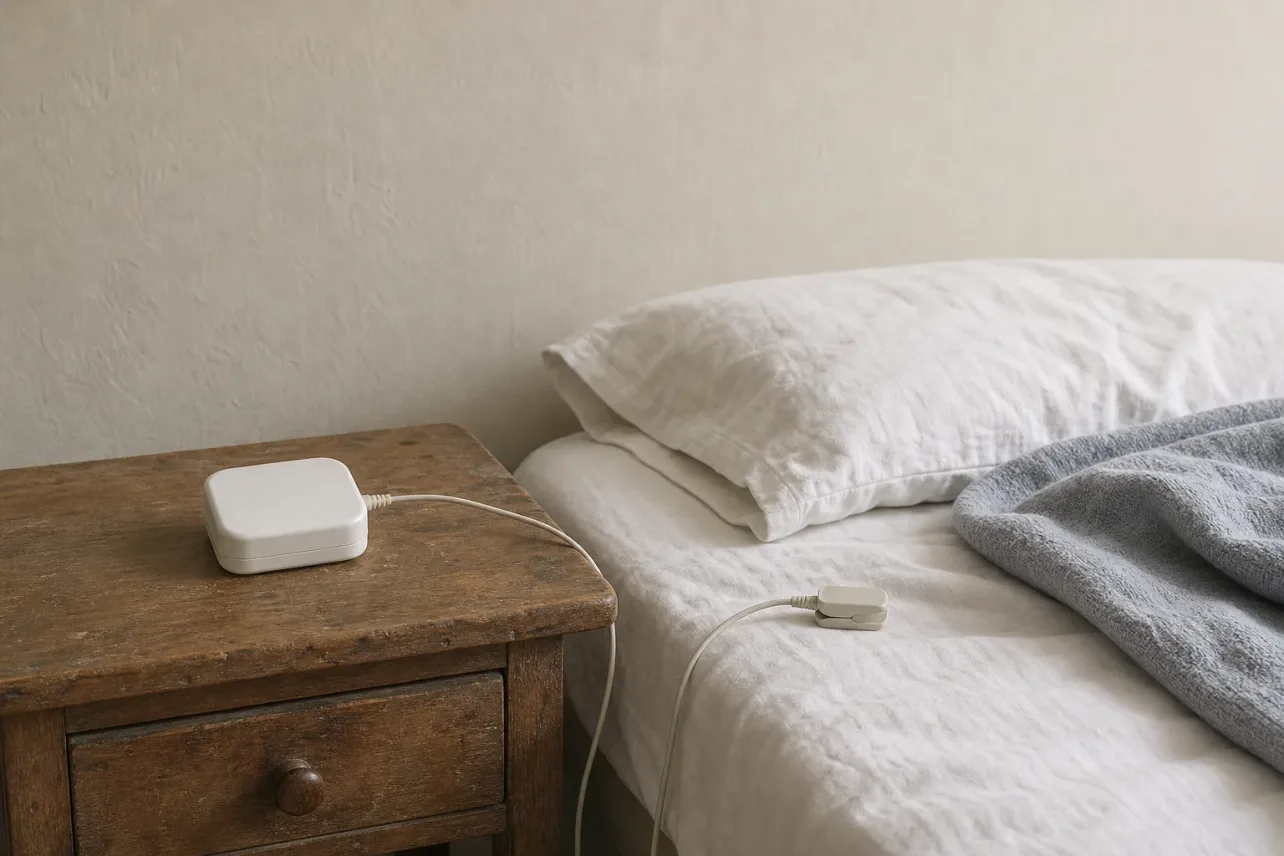
The first appointment is a conversation and an examination, and it often settles whether a test is needed at all. The order is usually the same.
- Describe the pattern. When it started, how many nights a week, what your partner sees, and the medicines you take. Done means a timeline the doctor can read back to you.
- Examination. Weight, blood pressure, breathing, and the nose, throat and jaw. Done means other explanations have been considered, including ones that have nothing to do with sleep.
- Score the sleepiness. The Epworth total is recorded alongside how much it affects work and driving. Done means the number is in your notes.
- Sleep study. Arranged at home where that suits and overnight in a clinic where it does not. Done means a night of breathing, oxygen and sleep has been recorded.
- Result and plan. The report is explained, and a positive airway pressure assessment (CPAP or BiPAP) follows when that treatment is being considered.
The report comes back with an apnea-hypopnea index, which counts how often breathing stops or becomes shallow in an hour of sleep. The NHS puts mild at 5 to 14, moderate at 15 to 30, and severe at anything over 30.
A grade is not a verdict on how you feel. Someone with a mild index may still fall asleep in the afternoon, and someone graded higher may report less. That is why the index is read beside the Epworth score, the history and the examination.
Bring the questions you want answered. Whether the test can be done at home, how soon the result arrives and what happens if treatment is offered are all fair to ask at the first visit, and the answers depend on the assessment.
Treatment is a separate conversation from grading. Positive airway pressure is one option among several, and the choice depends on the grade, the symptoms, the shape of the airway and what you can keep up with. Nothing starts before the report has been explained.
The recording itself is described on the sleep study we run, including what is measured overnight and how the night is arranged.
Driving, work and the risk of waiting
The NHS insomnia guidance is direct about one risk: do not drive when you feel sleepy.
Have you nodded off at traffic lights or caught yourself drifting on a motorway? That account belongs at the appointment, and it is a reason to book sooner. It is also the detail people leave out, because nothing came of it that time.
Work follows the same logic. Falling asleep in meetings, losing the thread of a task or needing caffeine to reach the end of an afternoon are the daytime half of a night problem, and they are easier to describe than the nights are.
Shift work complicates the picture, and it belongs in the history. A pattern that follows the roster for years may hide a sleep disorder underneath, and the account of when you sleep and when you are awake is what separates the two.
Ask the treating doctor about fitness to drive. The rules depend on where a licence was issued and on the medical assessment, so the answer comes from a doctor who has read the report and knows your case.
A partner sleeping in another room, a dozing episode at the wheel and a year of broken nights describe one problem from three angles. None of it improves by waiting for a better month.
Seeing a sleep doctor in Dubai, and whether you need a referral
Dr. Mohammad Fawzi Katranji holds four American Board certifications, including Sleep Medicine. He trained in internal medicine, pulmonary and critical care medicine and sleep medicine in the United States, and he has practised in the UAE since 2014.
Nothing has to be arranged in advance. Ask for the appointment with the symptoms you have, and let the assessment decide what comes next.
Breathing and sleep are assessed together here, through sleep medicine assessment in Dubai and the diagnostics that go with it, including spirometry, pulmonary function tests and bronchoscopy.
Some patients come to the clinic in Dubai; others start over video, which is easier from outside the UAE. When you are ready, request an appointment and tell the team what the nights look like.
Frequently asked questions
When should I see a doctor for sleep problems?
Book an assessment when a partner reports pauses or gasping in your sleep, when you feel sleepy most days despite enough time in bed, or when insomnia has lasted three months or longer. Any of those justifies a consultation, and no referral is needed to book one.
Is it normal to need 9 hours of sleep?
The nine-hour night sits at the top of the usual adult range. The NHS puts adult sleep needs at about seven to nine hours, so nine hours is normal for some people. Feeling sleepy after nine hours in bed is the pattern worth checking.
Can I go to the bathroom during a home sleep study?
Ask the team who set up the study before you go to sleep. They explain how to move around with the sensors on and what to do if you need to get up, and the instructions for your own study decide. It is a common question, and the set-up visit is the moment to ask it.
References
- NHS. Sleep apnoea.
- NHS. Insomnia.
- Asthma + Lung UK. Epworth Sleepiness Scale. Page last reviewed 30 April 2025.
Medical information. This article is educational and does not replace individual medical advice. In an emergency call 998.