
When to See a Pulmonologist: Signs That Need Assessment
A cough past three weeks, breathlessness that has changed, and a wheeze that keeps returning: when a lung assessment is due and what it measures.
 Written byDr. Mohammad Fawzi Katranji
Published
Dr. Mohammad Fawzi Katranji reviews this page before publication.
A cough that is still there after three weeks, breathlessness that has got worse, or a wheeze that keeps coming back is reason enough to have your lungs looked at properly. You do not need a diagnosis or a referral to book one.
Breathing trouble gets judged by how frightening it feels, when a clock would say more. A month of coughing is easier to live with than one bad night, and the month usually carries the more useful information.
The timings below come from NHS guidance and from the World Health Organization. They separate a symptom worth watching from one that needs a consultant, and they sit alongside the signs that mean calling an ambulance rather than booking an appointment. Adults and children are both seen, so a parent can bring a child with a recurring wheeze or a cough that will not settle.
Signs that need a lung assessment, at a glance
- A cough that lasts more than three weeks is the point at which the NHS advises seeing a doctor, and most coughs clear by themselves within three to four weeks.
- Breathlessness that is new or worse than it used to be, or that comes with swollen ankles, needs medical advice within days.
- Pain that moves from the chest into an arm, the back, the neck or the jaw, alongside breathlessness, means calling 998 in the UAE.
- Spirometry and pulmonary function tests show how the lungs behave on the day of the test, and a normal result does not exclude a condition that comes and goes.
- An online consultation can take a history and explain results, while spirometry needs the equipment and the room that only the clinic has.
When to see a pulmonologist: the short answer
A cough that has lasted more than three weeks, breathlessness that wakes you at night, a wheeze that returns every few weeks, or chest infections that come back after treatment are reasons to arrange a lung assessment. The assessment is for people without a diagnosis as much as for people who already have one.
NHS guidance on cough draws the clearest line. A cough usually clears by itself within three to four weeks, and one that runs past three weeks is listed as a reason to see a doctor (NHS: Cough).
Breathlessness follows a different rule. Difficulty breathing, and breathlessness that arrives with swollen ankles, are both listed as reasons to contact urgent care or a doctor (NHS: Shortness of breath).
These symptoms do not name a condition. The lung and airway conditions we assess at this practice include asthma, COPD, chronic cough, wheeze, breathlessness and suspected sleep apnea, and the first visit is about placing your symptom inside that list or outside it.
If a symptom has already outlasted the timings above, you can request an appointment and describe what you have noticed in your own words.
Signs that need assessment within days
Some patterns belong in a specialist clinic within days. The table places the common ones by how long they have lasted, and the assessment decides what sits behind each one.
| Sign | How long it has lasted | What to do |
|---|---|---|
| Cough, dry or bringing up phlegm | More than three weeks | Book a lung assessment |
| Breathlessness worse than it used to be, on stairs, at rest or at night | New, or getting worse | Contact urgent care or your doctor the same day |
| Breathlessness with swollen ankles | New | See a doctor promptly |
| Wheeze that comes and goes | Repeated over weeks or months | Assessment with spirometry |
| Chest infections that return after treatment | Several courses over months | Request a lung assessment |
| Coughing up blood | Even once | Get it checked urgently, the same day |
| Weight loss you cannot explain, with a cough | Over weeks | Book an assessment quickly |
The first three rows follow NHS guidance on cough and breathlessness, linked above. The rest are patterns that a respiratory history takes seriously, and a cough that refuses to settle deserves a look before the appointment (a cough that keeps coming back).
Waiting for a symptom to become dramatic is the usual mistake. A cough that is slowly worsening across six weeks usually says more than a severe one that settles in three days.
Symptoms that need emergency care, not an appointment
Breathing that suddenly becomes severe needs an ambulance. Call 998 in the UAE if you cannot get enough air to finish a sentence, if your lips or skin turn pale, blue or grey, or if you become suddenly confused or unusually drowsy.
Pain that starts in the chest and moves into an arm, the back, the neck or the jaw is an emergency when breathlessness comes with it, and the NHS lists it as one (NHS: Shortness of breath).
Coughing up blood needs urgent assessment, and a large amount at once means calling 998.
Children show it differently. A child who is working hard to breathe, whose ribs or the hollow at the neck pull in, who cannot feed or speak in short sentences, or who has turned pale and floppy needs emergency care without waiting for an appointment.
Do not drive yourself to hospital with severe breathlessness. Call 998, say that breathing is the problem, and let the crew take over when they arrive. The assessment described on the rest of this page is for symptoms stable enough to book.
Why breathing symptoms get missed
A cough that returns every winter, a wheeze that only shows up after exercise, or breathlessness that arrived so slowly it now counts as normal all get filed under dust, air conditioning, an infection that dragged on for weeks, age or being unfit. Each explanation sounds reasonable, which is what makes it last.
Asthma alone affected an estimated 363 million people in 2023 and caused 442 000 deaths, according to the World Health Organization. Its fact sheet adds that asthma is often under-diagnosed and under-treated, and that people with symptoms should speak to a health professional.
Fear keeps some people away from a clinic, and the fear is often out of proportion. The NHS says plainly that a cough is rarely a sign of something serious like lung cancer (NHS: Cough).
Long-standing breathlessness has a wide list of causes of shortness of breath, from asthma and COPD to heart problems and other conditions. That list is why the assessment starts with your pattern and works towards a name.
What a pulmonologist can measure that a GP visit may not
A GP can take a history, listen to the chest and treat an infection. A respiratory assessment adds measurements that a conversation cannot produce.
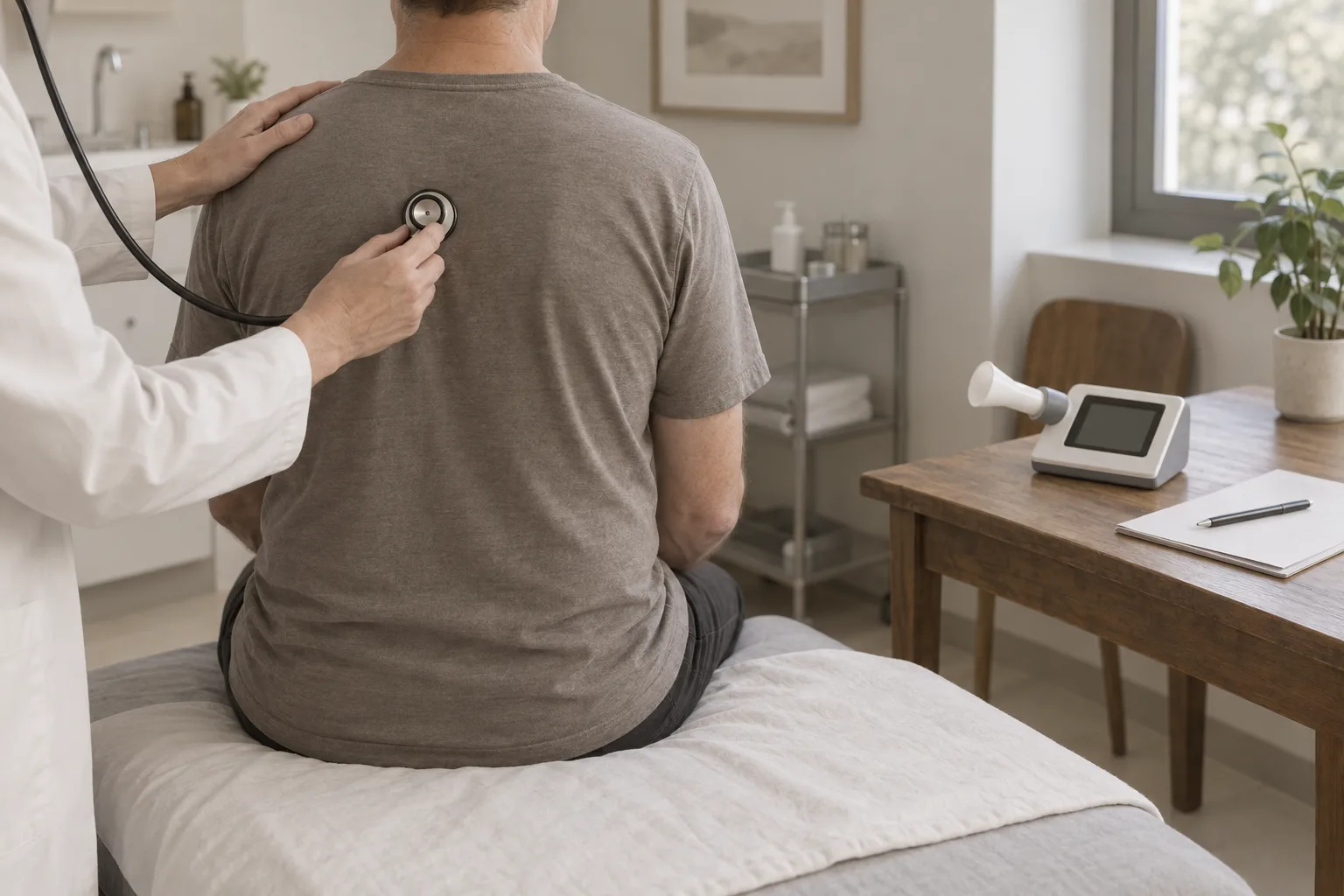
Spirometry comes first. You breathe out as hard and as long as you can into a machine, and it records how much air leaves your lungs and how quickly. The test is repeated after a bronchodilator, which shows whether the airways open up once the tightness is treated.
Pulmonary function tests add what spirometry cannot give, including lung volumes and how well gas crosses into the blood. The spirometry and lung function tests offered here cover both.
Bronchoscopy uses a thin camera inside the airways when something needs to be looked at directly. On the sleep side, a sleep study records breathing overnight when the symptom is snoring, witnessed pauses or daytime sleepiness, and a CPAP or BiPAP assessment follows when positive pressure treatment is being considered.
Each test describes the lungs on the day it is done. A normal result does not rule out asthma that comes and goes, and a single abnormal number does not name a disease. Results mean most when they are read beside the history, the examination and sometimes a trial of treatment.
What happens at the first assessment
One appointment usually covers the history, the examination and at least one breathing test.
- Book the visit. No referral and no existing diagnosis are needed, and the visit can happen in the clinic or over video, including for patients outside the UAE.
- Bring what you already have. That means inhalers and other medicines, old X-rays, CT reports, lung function printouts, a list of allergies, and a short timeline of when the symptom started and what makes it worse.
- Give the history. Expect questions about night waking, exercise tolerance, exposure at work and at home, smoking or vaping, and asthma or allergy in the family. A parent answers for a younger child, and the questions stay the same.
- Have the examination and the tests. Spirometry usually happens in the same visit, with a repeat after a bronchodilator, and pulmonary function tests are added when the first numbers need context.
- Agree the next step. Depending on the results, that may be imaging, bronchoscopy, a sleep study or a treatment trial with a review date.
A good first visit ends with a written plan and a copy of your results, not only a prescription. The mistake patients make is arriving without the old imaging or the inhaler list, which can mean repeating a test that was already done elsewhere.
Do you need a referral, and does a video visit work?
You can ask for a first appointment here with no referral and no diagnosis on file. Some insurers still ask for one before they cover a specialist visit, so check your policy before you call.
An online consultation suits a first conversation about a symptom, a review of results done elsewhere, and follow-up once treatment starts. It cannot include spirometry, a careful listen to the chest or a bronchoscopy, because those need equipment and a room.
Children are seen as well as adults. A child is assessed according to age and to what the parent describes, and some examinations can only happen in person.
Frequently asked questions
What happens at your first visit to a pulmonologist?
The visit combines a long history, an examination and breathing tests, usually in one appointment. Expect questions about when the symptom started, what triggers it and how it affects sleep and exercise, then spirometry. It ends with the results explained and a plan with a review date.
What are the three early warning signs of lung disease?
The patterns most worth acting on are a cough lasting more than three weeks, breathlessness that arrives sooner than it used to on the same walk, and a wheeze that keeps returning. Coughing up blood or losing weight without trying also needs prompt assessment.
What four questions will a pulmonologist ask you?
Expect questions about how long the symptom has lasted, what makes it better or worse, whether it wakes you at night, and what you have already tried, including inhalers and antibiotics. Bring a timeline, and mention exposure at work and at home.
What tests will a pulmonologist do?
Most assessments start with spirometry, repeated after a bronchodilator. Pulmonary function tests, a chest X-ray or CT scan, a bronchoscopy or a sleep study are added when the history points that way, and blood tests may check for other causes.
What to do next, and what to watch
If a cough has outlasted three weeks, or breathlessness has changed the way you climb stairs, book the assessment and let a measurement answer the question.
Take the old X-ray, the inhaler list and a two-week symptom diary to the visit. A diary often shows a pattern that a single appointment cannot: how many nights you woke, how far you walked before stopping, and how often you used a reliever inhaler.
Start it this week, before you book, and keep it for a fortnight. Written down, those numbers give the assessment something to measure against.
If breathing becomes severe, or you cough up blood, call 998 and do not wait for the appointment. For everything else, book a consultation and say what you have noticed.
References
- NHS: Cough. Last reviewed 8 December 2023.
- NHS: Shortness of breath. Last reviewed 30 January 2024.
- World Health Organization: Asthma fact sheet. 28 April 2026.
Medical information. This article is educational and does not replace individual medical advice. In an emergency call 998.