
COPD symptoms that are easy to explain away as age
 Written byDr. Mohammad Fawzi Katranji
Published
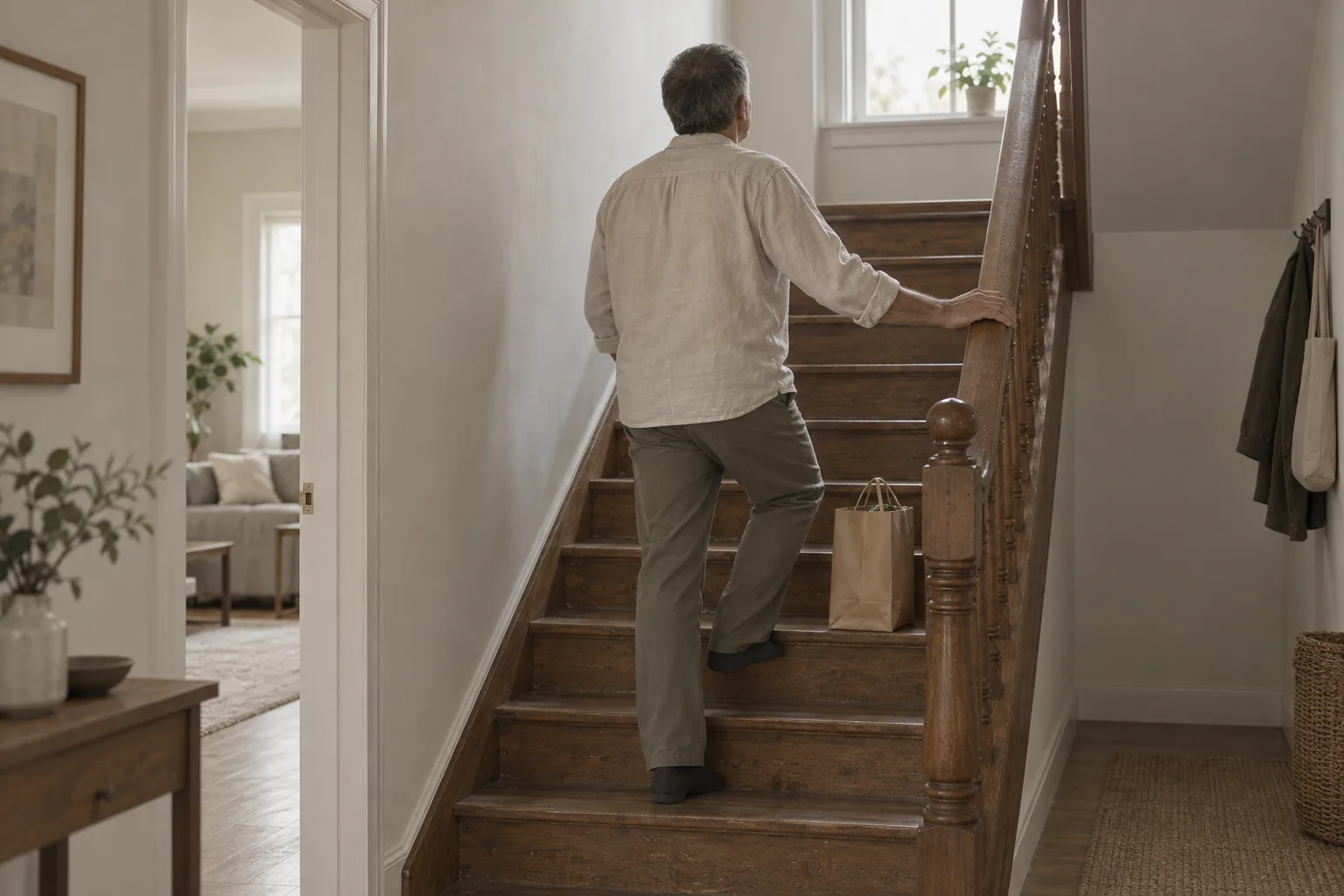
COPD symptoms usually build over years, and most people notice nothing until their late 40s or 50s, according to the NHS. A set of changes that arrive together is what tends to send someone to a clinic: breathlessness climbing a staircase you use every day, a cough that comes back each winter, phlegm that takes a few minutes to clear in the morning, a whistling sound as you breathe out, and less energy on a familiar walk.
The condition behind them is chronic obstructive pulmonary disease, or COPD, which makes breathing increasingly difficult (NHS). That slow build is what lets the pattern pass as ordinary. Age explains the stairs, the August heat explains the breathlessness, and a chest infection last winter explains the cough. Each explanation covers one change and leaves the rest of the set standing.
Each of these looks different during an ordinary week, and one of them is missed far more often than the others. What to have ready when you book, and what a breathing test can and cannot settle, follows from there.
If the week described here sounds like yours, book an appointment and describe it in your own words. No referral, and no existing diagnosis, is needed to ask.
COPD symptoms at a glance
- NICE asks about five symptoms in adults over 35 with a risk factor such as smoking: breathlessness on exertion, a cough that persists, phlegm, chest infections that return each winter, and wheeze.
- The breathlessness that matters most is the kind you have already adjusted for, by walking slower or taking the shorter route.
- Post-bronchodilator spirometry is the test that confirms COPD, measured before and after an inhaled bronchodilator.
- About 1 in 4 people living with COPD never smoked, according to the American Lung Association, so dust and fumes at work count as an exposure too.
- Antibiotics treat a chest infection, and they do not explain why a fourth one arrived in the same year.
COPD symptoms: what to look for
NICE's COPD guideline, NG115, sets out who to suspect: someone over 35 with a risk factor, usually smoking or a history of smoking, who has one or more of five symptoms (NICE NG115). The five are breathlessness when you exert yourself, a cough that persists, phlegm produced regularly, chest infections that return each winter, and wheeze.
A single item from that list is weak on its own, and clinicians treat it that way. Several arriving together, and staying, is what changes the picture. A cough that clears three weeks after a cold is an ordinary event. A cough that has turned up every winter for four years belongs in a consultation.
Whether a breathing test is worth arranging comes down to exposure history and to timing. The first is cigarettes now or in the past, shisha at home, dust or fumes at work. The second is time. Weeks behave differently from years, and a changing cough that has run for several winters sits at the far end.
Of the five, breathlessness tends to arrive first and get taken seriously last. None of this turns a symptom list into a diagnosis. The symptoms are pointers, and the guideline's next step is a test.
What the five symptoms look like in an ordinary week
A symptom list is easy to read and describes almost nothing. The useful question is what each item looks like on a Tuesday: what you stopped doing, what you now do more slowly, and what you clear from your chest each morning.
| Symptom in NICE NG115 | What it looks like during a normal week |
|---|---|
| Breathlessness on exertion | Stopping halfway up with the shopping. Letting a companion walk ahead. Taking the stairs more slowly than you did last year. |
| A cough that persists | It outlasts the cold that started it, or it settles in each October and leaves in spring. |
| Phlegm produced regularly | A few minutes of throat-clearing in the first hour of the day, most mornings. |
| Chest infections that return each winter | Antibiotics more than once in a winter, or the same illness at the same point every year. |
| Wheeze | A whistling note on breathing out, often at night or after stairs, sometimes audible from the next room. |
Tiredness belongs with these, even though NICE counts it through exercise tolerance. You finish a familiar walk with less left over than last year, and getting your breath back takes longer. That longer recovery is the part people usually describe first.
Smoking remains the leading cause, and about 1 in 4 people living with COPD never smoked, according to the American Lung Association. Occupational exposure accounts for 10% to 20% of respiratory symptoms or lung function impairment consistent with COPD, the same source reports. Dust, fumes, air pollution and smoke from biomass fuel belong in the conversation even for someone who has never smoked.
The symptom that hides longest, and why age gets the blame
Breathlessness that you have already worked around is the one that hides longest. The adjustment is quiet: the lift for one floor, the shorter route to the metro, the friend who now walks ahead, the phone call you pause while climbing the stairs.
None of those feel like a symptom. They feel like getting older, a few kilos more than at 30, or a summer that never lets up. Most people with COPD notice nothing until they are in their late 40s or 50s, the NHS notes, and that is the decade in which a slower walk is easiest to put down to age.
Clinicians grade this by the activity that brings the breathlessness on. The Medical Research Council's dyspnoea scale grades it from 1 to 5, and that is the grade NICE NG115 asks for (NICE NG115). A stair flight that now costs you a stop becomes a number, and the number can be compared with the one you would have given last year.
The over-35 rule then matters more than the severity of the symptom. If you have ever smoked, and one of these changes has arrived in the past year or two, the question is worth asking at any grade.
A cough that returns each winter, and repeat infections
A cough you have learned to work around gets filed as an annual nuisance, especially in a household where everyone smokes. The NHS lists a persistent chesty cough with phlegm that does not go away as one of the main symptoms (NHS), and NICE gives frequent winter bronchitis its own place on the list (NICE NG115).
Antibiotics work on the bacterial infection in front of them. They do not explain why a fourth one arrived in the same winter, and a prescription is not a diagnosis. That is the moment to ask for spirometry rather than take a repeat prescription.
An infection that clears and stays away for a year tells one story. A cough that never fully settles between infections, with phlegm most mornings, tells another, and the second matches the guideline's chronic cough and regular sputum items.
A morning cough is easier to ignore than a cough that hurts. Clearing your chest before breakfast can feel like part of waking up, until someone on the phone asks whether you are unwell.
If you can count the infections by winter, that count is worth describing at a consultation. Bring the dates if you remember them, and note which antibiotics you were given.
Inhalers, staging and the treatment plan belong to the specialist assessment that follows a diagnosis.
What else can cause the same symptoms
The NHS names asthma, bronchiectasis, anaemia and heart failure as conditions that cause similar symptoms. Harvard Health adds reflux and heart disease, and notes that allergies or the side effects of a medicine can look the same. That overlap is why a symptom checklist cannot settle the question at home.
What separates them sits in the history and in the test, not in the symptom alone: when the breathlessness started, whether it varies from week to week, what the chest sounds like, and what the spirometry numbers show before and after a bronchodilator. A consultation starts with a conversation for that reason.
Age is not a filter for any of them. Asthma can begin in adulthood, and each look-alike has its own pattern of when the breathlessness arrives and what makes it worse.
Dr. Mohammad Fawzi Katranji assesses adults and children with these overlapping conditions, and the lung conditions assessed here page lists the ones seen at the practice.
What to say when you book, and what the breathing test shows
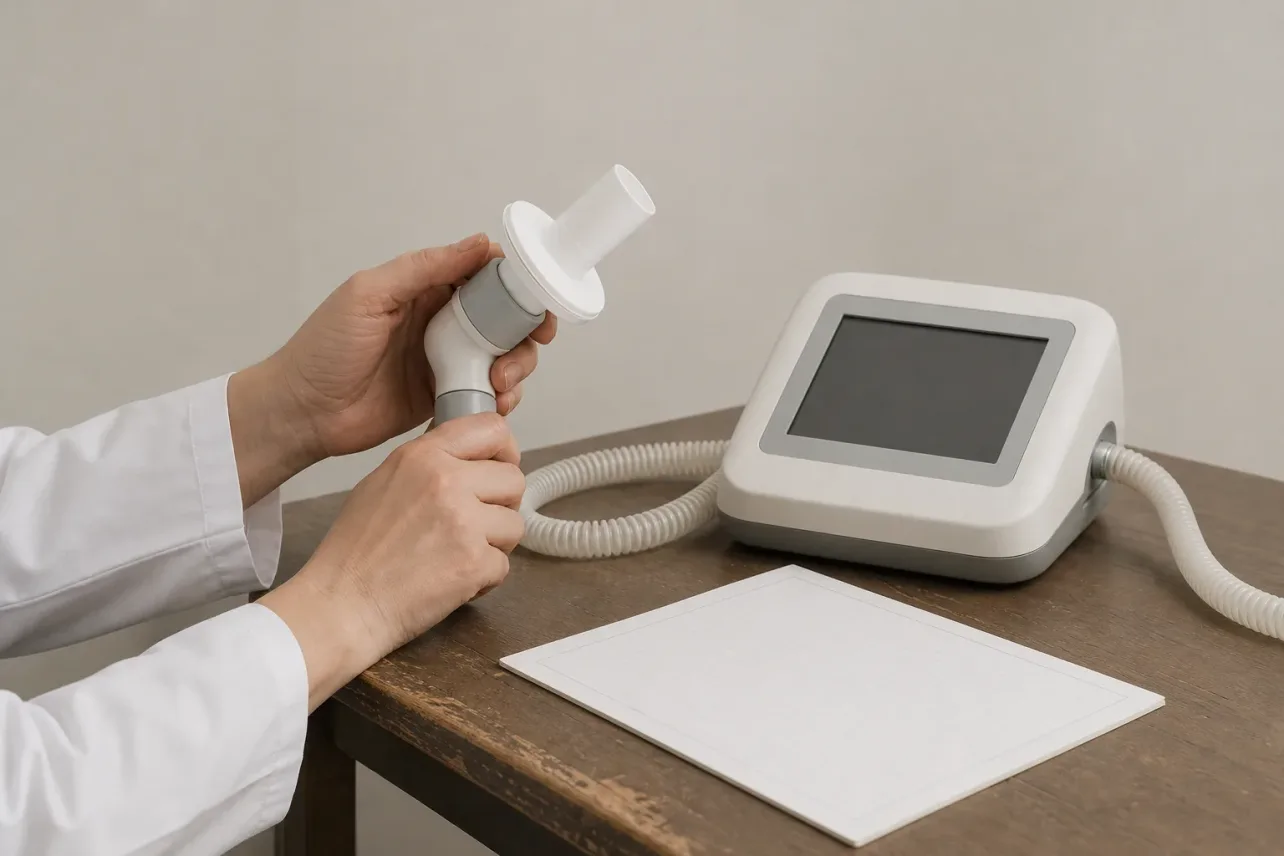
The first appointment is more useful with three things ready, and none of them needs a diagnosis in advance.
- The symptoms and their timeline: which of the five you have noticed, roughly when each began, and what brings it on.
- Exposure history: cigarette or shisha smoking now and in the past, and any dust, fumes or smoke you have inhaled at work or at home.
- Infection history and any results already in hand: antibiotic courses over the past year, old X-ray reports, or a breathing test done elsewhere.
You can book without a referral, and without a diagnosis already in place. A video consultation can start the conversation, and the breathing test itself is done in person.
The assessment has an order to it, and each answer points to the next question. Your history comes first, then an examination of the chest. Pulse oximetry follows: a sensor on the finger estimates how much oxygen your blood is carrying.
Spirometry comes next, and it is repeated once an airway-opening inhaler has had time to work. You breathe into a mouthpiece, the machine records volume and flow, and what spirometry measures sets out what to expect. NICE NG115 adds a chest X-ray, a blood count and a BMI to that first appointment (NICE NG115).
Post-bronchodilator spirometry is the test that confirms COPD (NICE NG115). The figure is read with your history and examination, and no single number carries the decision on its own.
A normal or borderline result does not close the question. It moves it: further lung function tests, or a few weeks of home peak flow readings, can help separate COPD from asthma. The COPD assessment and care planning page sets out what happens after a diagnosis.
Start with the change you would least like to explain to someone. If the stairs, the winter cough and the morning phlegm now belong to the same story, you have enough to describe at a consultation, and the breathlessness does not have to be severe first.
This month, write down when each change started, the antibiotics you took in the past year, and the dust or fumes you worked in. Take the note with you, or read it out on a video call.
If the pattern fits, book an appointment and say what changed and when. The appointment begins with your description, and a breathing test follows if it is the right question to ask.
When breathing needs an ambulance
Some changes need an ambulance, and a booked appointment is too slow for them. In the UAE, dial 998, or attend the nearest emergency department. That applies to breathing that is severe or worsening within hours, to lips or fingertips that turn blue or grey, to new confusion or unusual drowsiness, and to chest pain.
Breathlessness that has got worse without becoming severe is a different call. It deserves a message to the clinic, so the plan can change before the next one happens.
If you already have a COPD diagnosis, the signs that mean an ambulance, and the order to do things in, are set out in COPD flare-up warning signs.
Medical information. This article is educational and does not replace individual medical advice. In an emergency call 998.