
Bronchiectasis symptoms and why a cough keeps coming back
A cough that keeps returning with phlegm is sometimes damaged, widened airways rather than another chest infection. What a CT scan shows that spirometry cannot, and what long-term care involves.
 Written byDr. Mohammad Fawzi Katranji
Published
Medical review pending. Dr. Mohammad Fawzi Katranji, consultant pulmonologist, reviews each article before it is published, and the review date will appear here once it is recorded.
Bronchiectasis leaves the airways wider and thicker than they should be, so they hold mucus and become infected again and again. In adults there is currently no cure, and treatment aims to clear the phlegm and cut the number of infections (healthdirect).
Most people who reach this diagnosis have heard "another chest infection" more than once. An antibiotic course helps for a week or two, the cough settles, then it returns. Something structural is going on, and a scan is what finds it.
This page covers what the damage does to the airways, how the pattern differs from COPD, what a CT scan shows that spirometry cannot, and what long-term care involves.
- The change is structural: inflammation damages the airway wall, and the airways stay widened and thickened (Merck Manual Consumer Version).
- A high-resolution CT scan shows that damage; spirometry measures how well the lungs work (healthdirect).
- Clearing the chest is daily work, taught by a physiotherapist and sometimes helped by a hand-held device (NHS).
- Once infections pass three a year, a specialist may discuss long-term antibiotics (NHS).
What Bronchiectasis Is: Damaged, Widened Airways That Hold Mucus
Bronchiectasis is a long-term lung condition in which inflammation damages the walls of the airways. The bronchi, the tubes that carry air into the lungs, become wider and thicker than they should be, and produce more mucus than a healthy airway moves. That mucus stays in the widened tubes, and infection keeps returning (healthdirect).
The widening does not go away. Merck Manual calls it an irreversible widening and thickening of portions of the airways, resulting from damage to the airway wall (Merck Manual Consumer Version). Mucus that a healthy airway would carry upward sits in the damaged one and becomes infected (NHS).
If you have been treated for repeated chest infections without anyone imaging the shape of your airways, that image is the missing step. If a wet cough has lasted months, you can book an appointment and have the pattern assessed, with or without a referral.
The Symptoms: A Cough That Refuses to Clear
The symptom that brings most people to a specialist is a cough that never clears, one that produces phlegm in any shade from clear and white through to yellow or green (NHS). Infections arrive several times a year, each one making the cough and the phlegm worse for days or weeks.
Wheeze, breathlessness, chest pain and tiredness belong to the same picture, along with crackling or squeaking sounds when you breathe (NHS). Coughing spells cluster early in the morning and again late in the day, Merck Manual notes (Merck Manual).
The NHS advises seeing a doctor once a cough has run past three weeks. Blood in what you cough up needs assessment sooner. Heavy bleeding or severe difficulty breathing needs emergency help, which in the UAE means calling 998.
The guidance on when a persistent cough needs a specialist sets out how a structured assessment works, and when another antibiotic course stops being the answer.
Bronchiectasis or COPD? Telling Them Apart
Bronchiectasis and COPD often appear in the same person. The NHS describes it as common to have bronchiectasis together with asthma or COPD, and Merck Manual makes the same point about COPD (NHS; Merck Manual). One diagnosis therefore does not rule out the other.
The usual shapes differ. A daily wet cough with phlegm that has gone on for years, with infections that keep returning, points toward damaged airways. A smoking history, slowly worsening breathlessness and less phlegm point elsewhere, and COPD symptoms and care sets out what that pattern usually means.
A CT scan settles which is present, and whether both are. If you have been told you have chronic bronchitis, ask whether the airway walls themselves have been imaged. If you are unsure which pattern fits, the lung and airway conditions we assess page sets out which symptoms lead to which appointment.
How Bronchiectasis Is Confirmed: What Each Test Shows
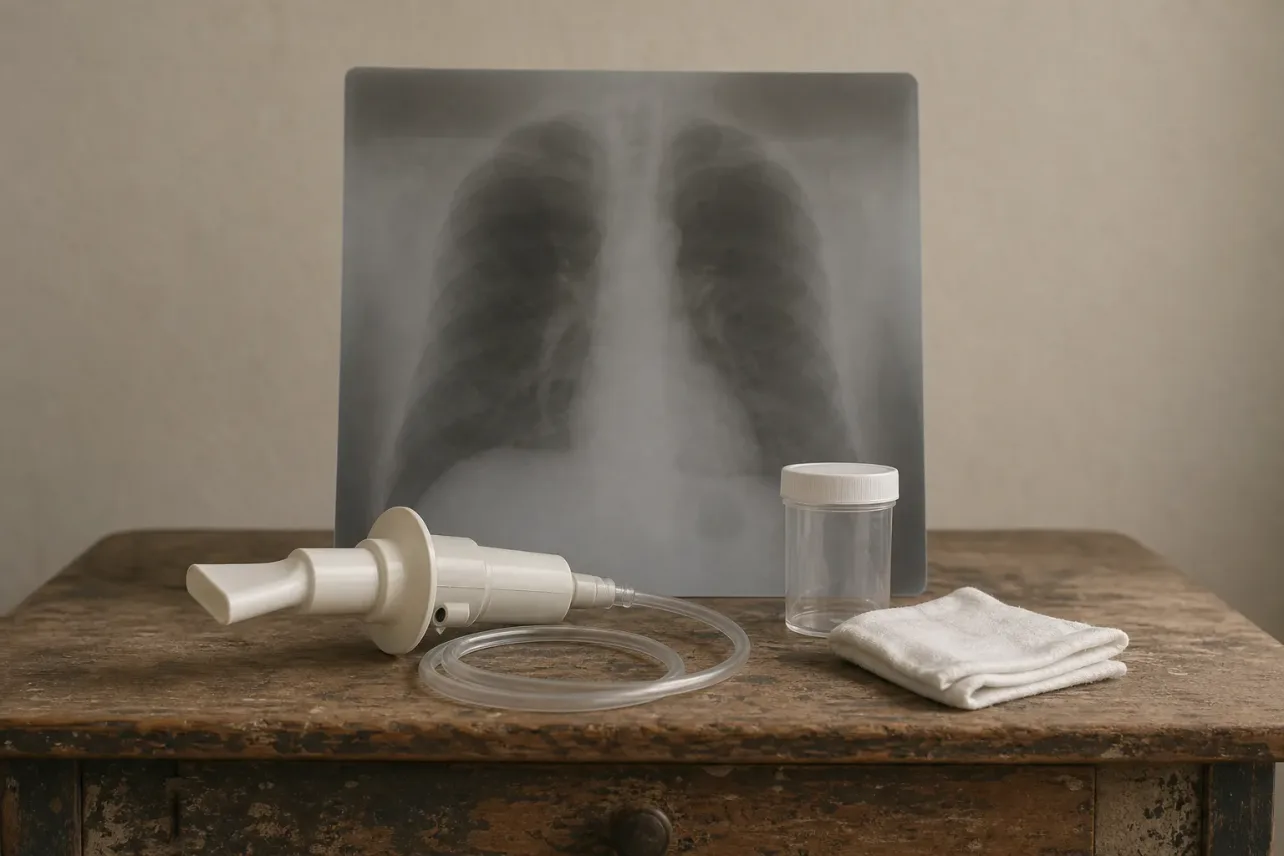
The first round of tests usually happens before a specialist is involved. The NHS lists a sputum sample to check for infection, a chest X-ray, a spirometry test and blood tests. Where those point toward bronchiectasis, the next step is referral for a CT scan, which confirms the diagnosis (NHS).
A sputum sample answers one question: is an infection active now? Blood tests look for conditions that could explain the damage, including problems with the immune system (NHS).
Spirometry records the volume you can blow out and how fast, which shows how well your lungs are working (spirometry and lung function tests). It says nothing about the shape of the airways, so a normal result leaves the question open.
The CT scan shows the damage itself: airways that are dilated, with thickened walls, and how much of the lung is affected. The high-resolution CT is the best test for diagnosing bronchiectasis, according to healthdirect.
Long-Term Care: Airway Clearance, Vaccination and Flare-Ups
Care is shared between a GP, a nurse, a physiotherapist and sometimes a specialist, with check-ups and tests at least once a year. Treatment aims to control symptoms and lower how often infections return; in adults the damage itself is not reversed (NHS).
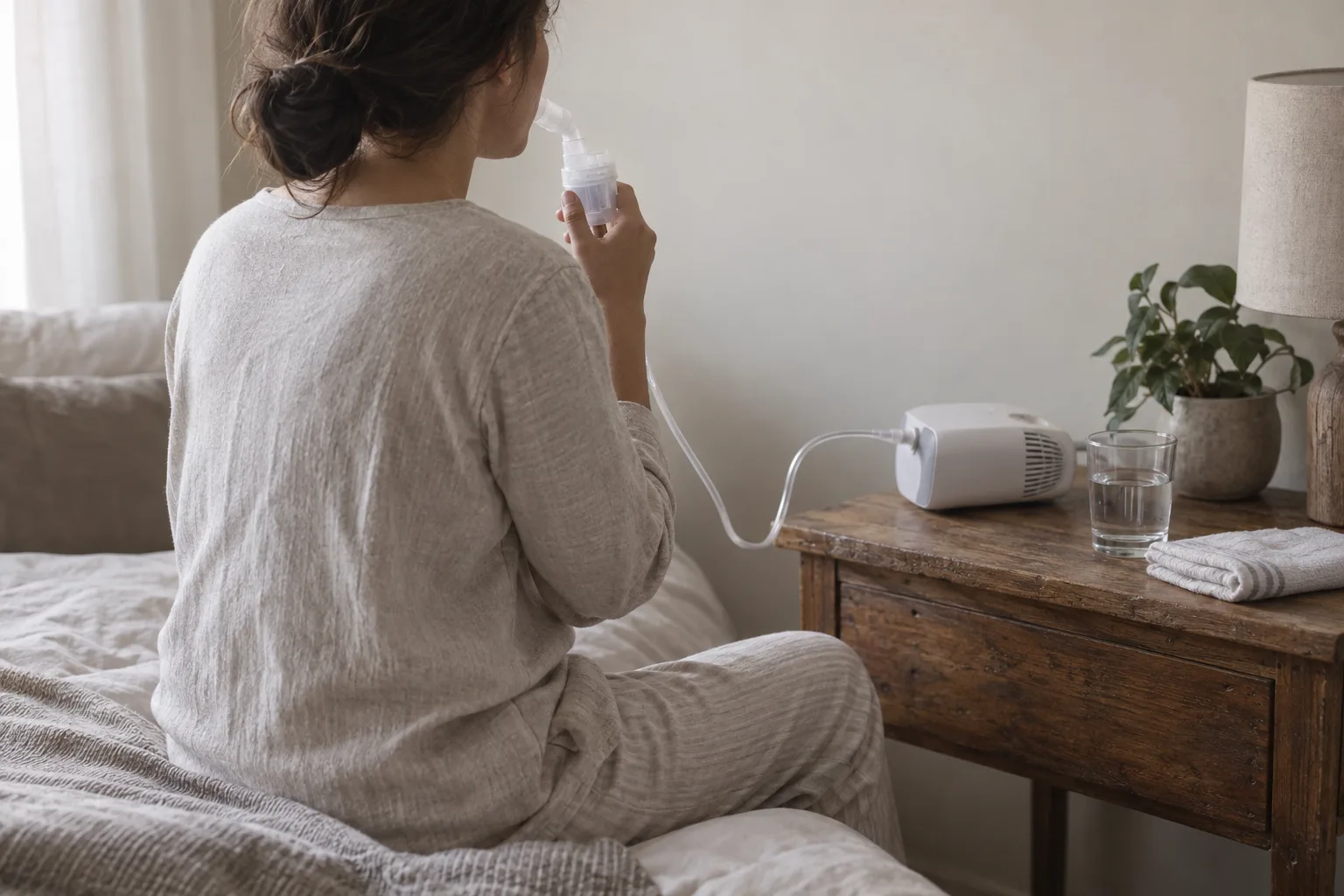
Clearing the chest is the daily task at the centre of it. A specialist physiotherapist teaches breathing, coughing and positioning techniques, and may suggest a hand-held device that uses vibrations to loosen phlegm (NHS; healthdirect). Where phlegm is hard to shift, the care team may add a nebuliser with a salt solution before the exercises (NHS).
Flare-ups follow a plan. You may be given antibiotics to keep at home, with instructions on when to start them, and asked for a sputum sample when symptoms change. Where infections return more than three times a year, a specialist may raise long-term antibiotics.
Vaccination belongs to the same routine: flu every year, pneumococcal and COVID-19 as advised (NHS). Regular exercise, not smoking and clean hands cut the risk of infection. Anxiety and depression are also more common with this condition, and healthdirect says they are worth raising with the care team.
Questions to Ask at a First Appointment
Bring the history with you: how long the cough has lasted, how much phlegm you produce, how many antibiotic courses you have taken in the past two years, and any smoking or childhood infection history. Then work through the list.
- Is this bronchiectasis, or is something else causing the cough?
- Which test will confirm or exclude it, and when will I have the result?
- What did my sputum sample grow, and does that change the treatment?
- Was my scan reported for airway damage, or only for infection?
- Who will teach me to clear my chest, and how often should I do it?
- What counts as a flare-up for me, and when should I start the antibiotics I keep at home?
- Who do I contact out of hours if I get worse?
None of these questions requires a diagnosis to ask. Ask the clinic for a record of your antibiotic courses before you go, since the count shapes what a specialist considers next.
Common Questions About Bronchiectasis
How common is mild bronchiectasis?
Published figures do not separate mild cases. The American Lung Association estimates that 350,000 to 500,000 adults in the United States have bronchiectasis, and that the risk rises with age (American Lung Association). Those are US figures, and no UAE count is cited here.
What are some home remedies for bronchiectasis?
Nothing at home replaces daily airway clearance. The routine your physiotherapist taught you, regular activity, not smoking, current flu and pneumococcal vaccines and clean hands all lower the chance of infection (NHS).
Can nebulisers be used to treat bronchiectasis?
Sometimes. Where phlegm is hard to cough up, the care team may suggest breathing in a salt solution through a nebuliser before the clearance exercises (NHS). It suits some people and not others, so ask before buying one.
References
Sources: NHS, Bronchiectasis, last reviewed 11 June 2025; healthdirect, Bronchiectasis, last reviewed September 2024; Merck Manual Consumer Version, Bronchiectasis; American Lung Association, Learn About Bronchiectasis.
Medical information. This article is educational and does not replace individual medical advice. In an emergency call 998.